

We had a heavy snow on wed. jan.2nd in Tehran. These pictures are taken in Melat park and Vanak st. with Olympus digital camera.


 It is been few weeks that I've not posted any new images. My sketches are ahead of postings. Last night I was introduced to a new drawing class. Quite different from the classes in Toronto. Still it was good enough to draw a closed pretty girl with tight jeans. i'm going to start a new blog for this class to post the student drawings. Here you see the sketches that I've done recently
 This is a commissioned watercolor that I did recently. The composition is taken from a painting by Atashzad. The colors are changes slightly.
 These sketches are part of images that I've done while watching a TV talk show recently.


 Back to my home town Tehran, while missing the sketching that I used to do a lot in Toronto, I did these two watercolors at home. the two figures is from a photo taken in Poerto Vallarta. The other one is depicted , with some changes, from a work by john yardly the well known British watercolorist.

 Nowadays, I sketch at least one in a day. Whenever i'm outdoor, especially when the weather is cooperatve, I do live sketching. At home, I usually go to my photos' album. The color and atmospher would not be the same as the original image necessarily. In other word, I change it as I like.
 We have all passed through the moments like to be just by ourself and experience sorrow or some other feelings deep inside. This quick sketch reminds me of this glorious moments.
 I did this sketch from a photo taken in a city bus in Puerto Vallarta during my recent visit to this city.The basic lines are in watercolor penci, highlighted by watercolor ink and fountain pen. Waterbrush filled in with light w/c ink was added in last stage.
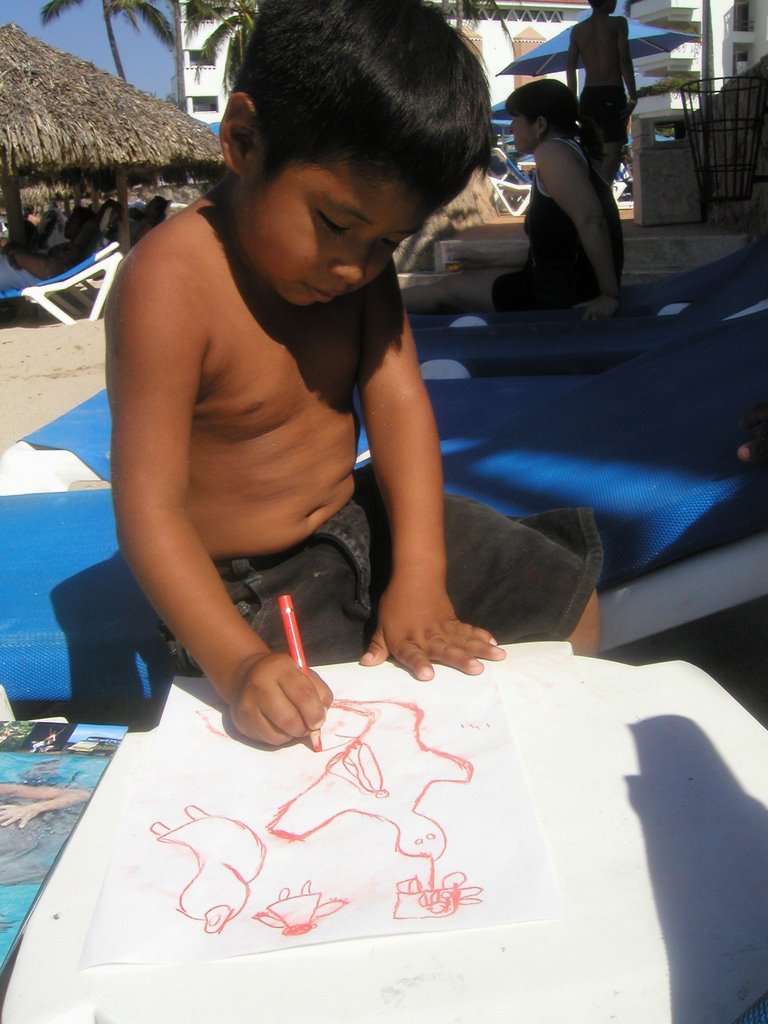
 I met Louis and his younger brother in Puerto Vallarta, Mexico wandering around a beach while their mother was selling mexican hand crafts to tourist. while I was sketching some scenary, I asked him and his brother to come and sit by me. Though they did not know English at all and neither me Spanish, we could communicate very easily. To get them attracted, I handed a paper and pencil to the younger boy to draw. And while he was busy with drawing, I made a sketch of Louis, the older boy.
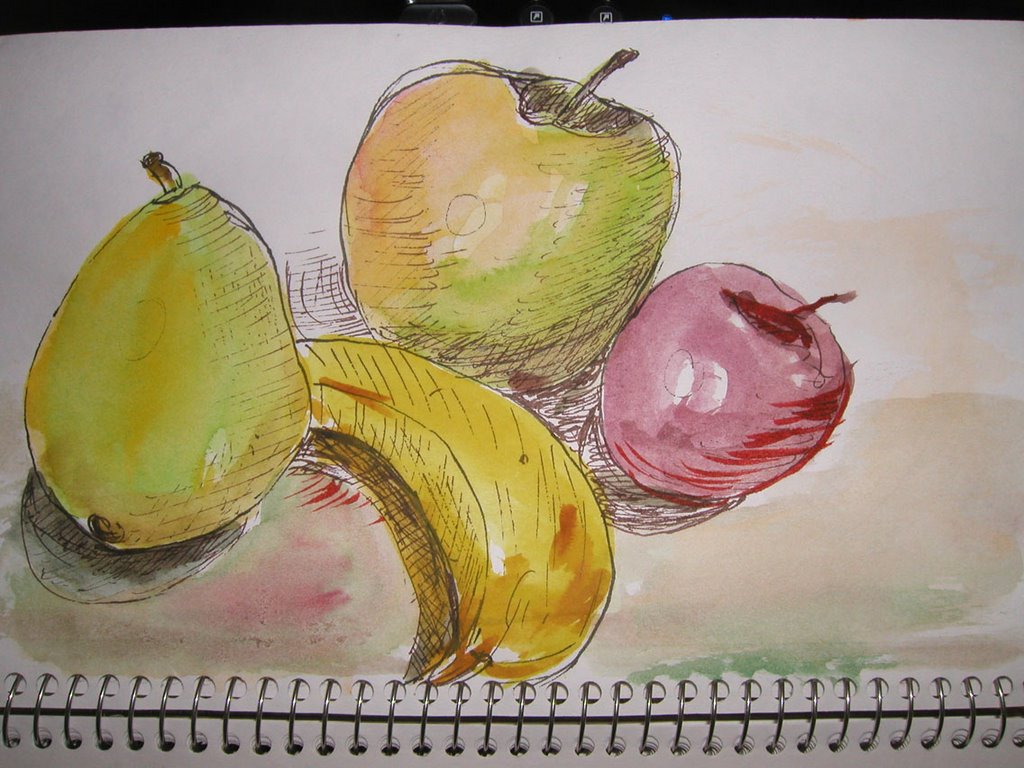
 For many people this marks the point when they know they are beginning to think like an artist. You’ll find you will start using your very own fingers and thumbs to construct a viewfinder to check out potential images to sketch. (Do try to avoid driving the car at the same time!) You will soon find yourself wanting to learn more about about the design and composition of your drawings and paintings. You will want to practice sketching to develop your skills in making choices in this area.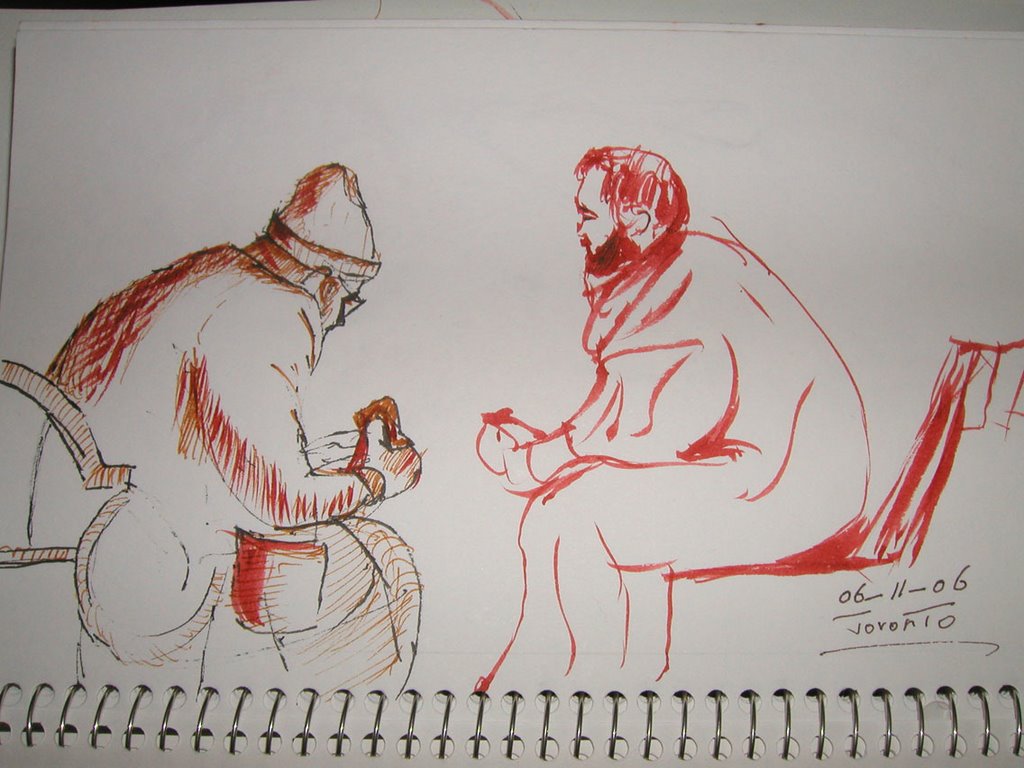

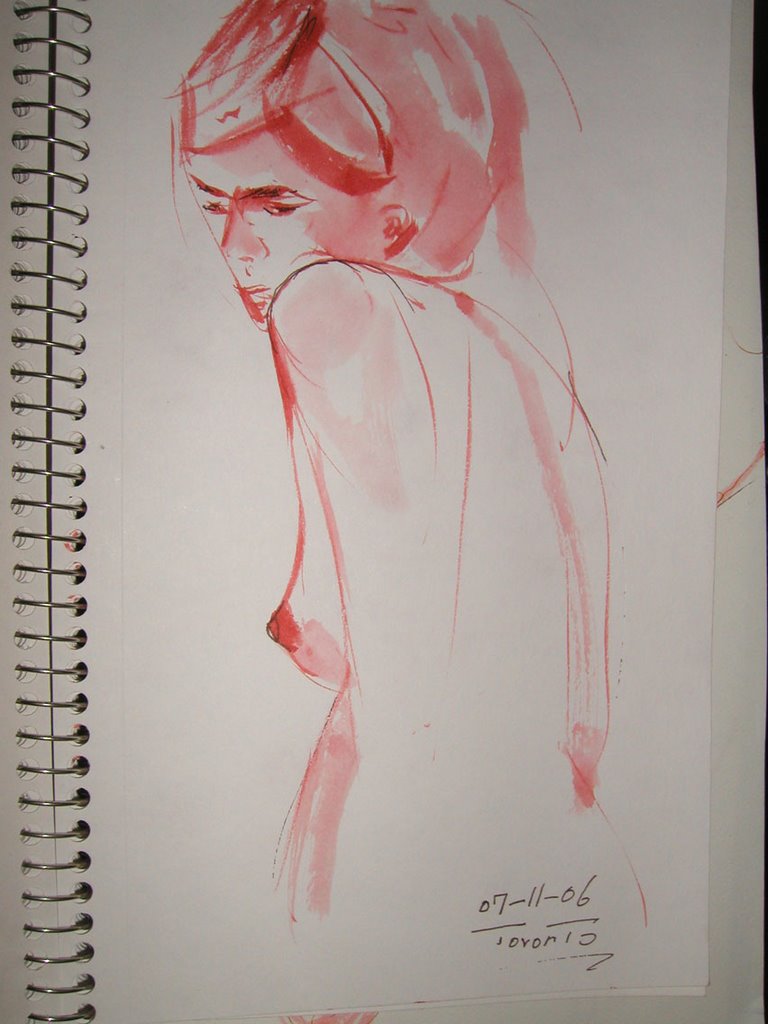

 Today it was the last session of the 5 weeks drawing class I took with Erick Budovitch in Toronto. though before taking this class, I had done lots of drawing, sketches and paintings, he simply showed me that for a fundamental drawing, it is better to start from the very beginning. Through some hard and sometimes boring training he demontrated that for a good drawing I should forget the details for a while and just try to see the shapes in big masses and geometrically , eather in figures , lanscapes or still life . Seeing the values and contrast of lightness and darkness of the model come in the next stage.
 Posts
All Comments
Posts
All Comments


)