Thursday, December 28, 2006

New sketches


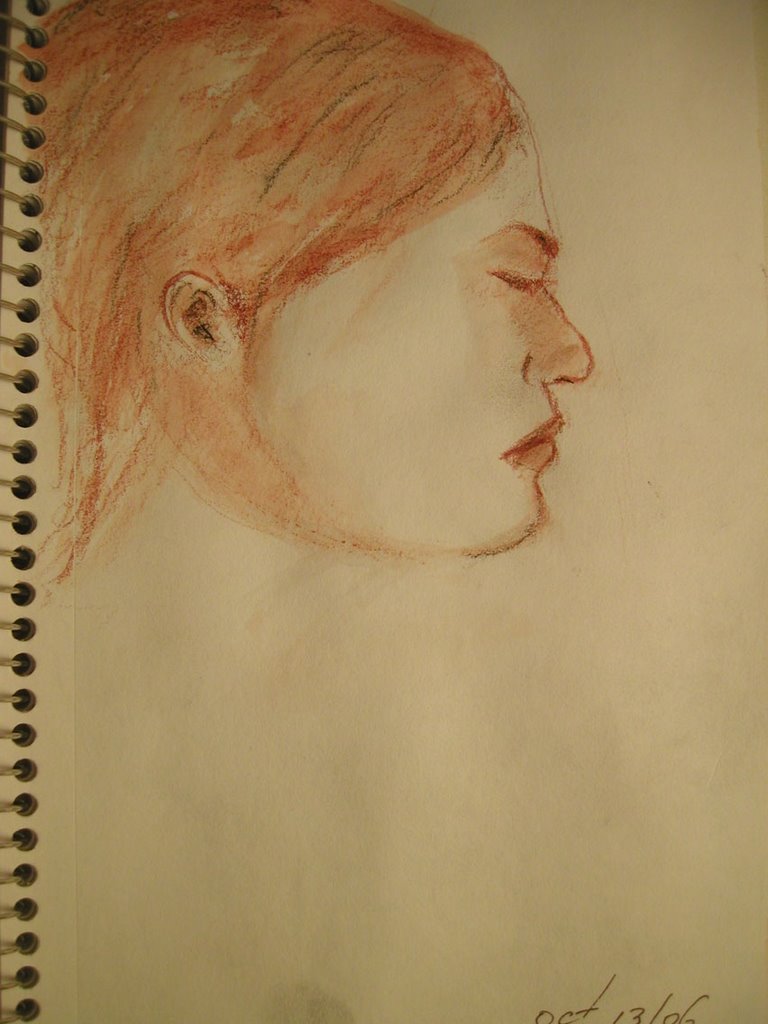
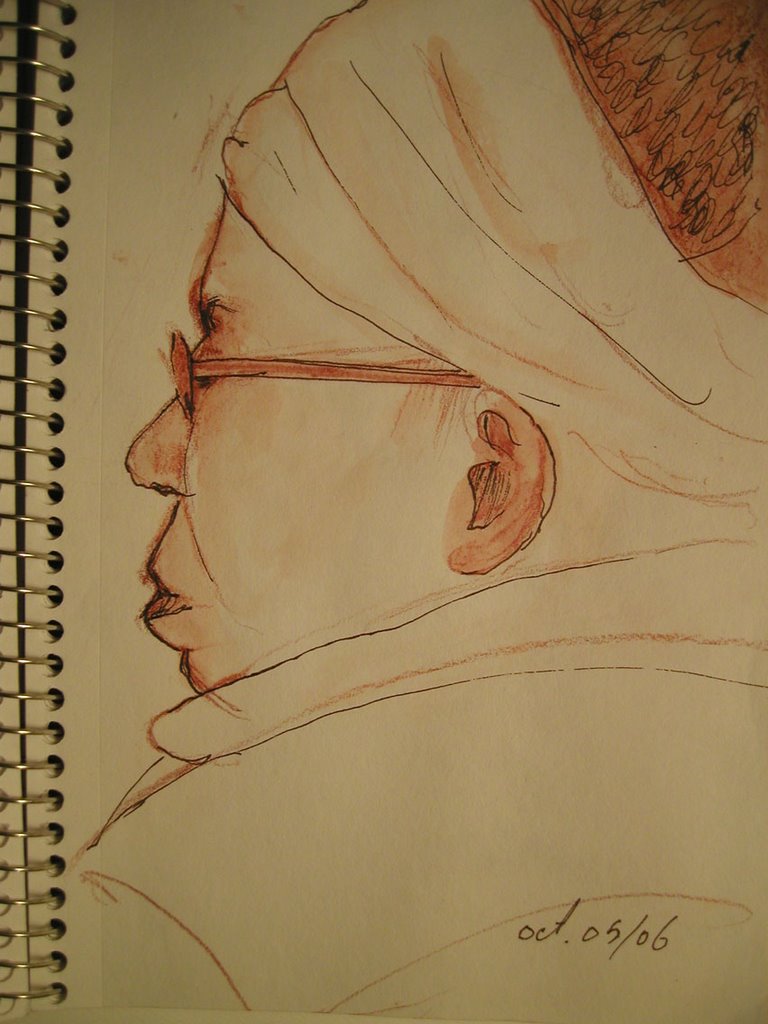
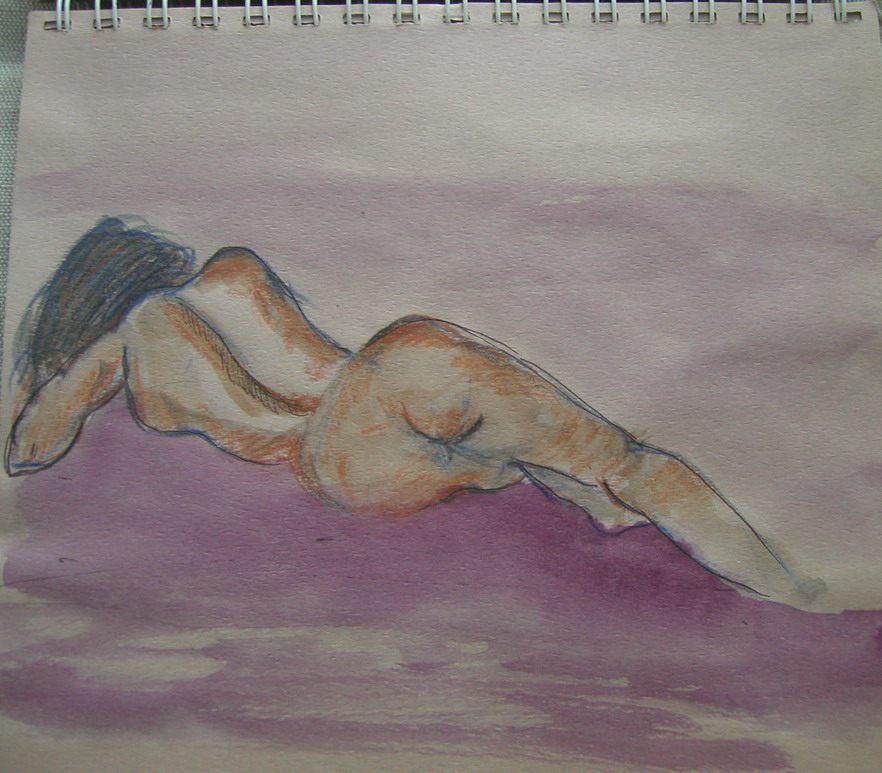
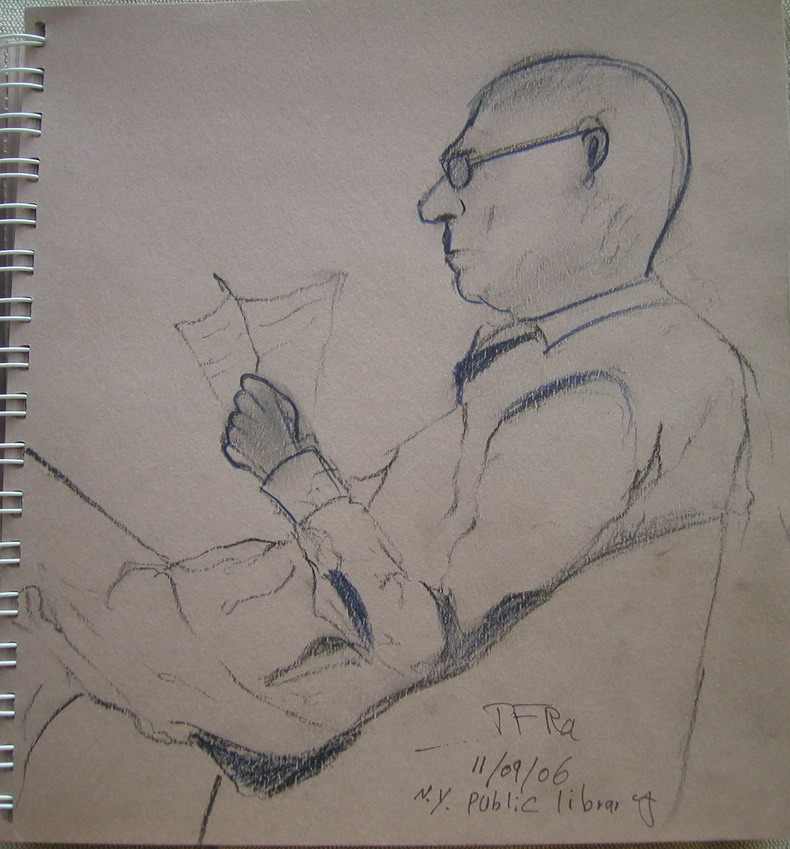
Nowadays, I sketch at least one in a day. Whenever i'm outdoor, especially when the weather is cooperatve, I do live sketching. At home, I usually go to my photos' album. The color and atmospher would not be the same as the original image necessarily. In other word, I change it as I like.

Wednesday, December 27, 2006

sollitude

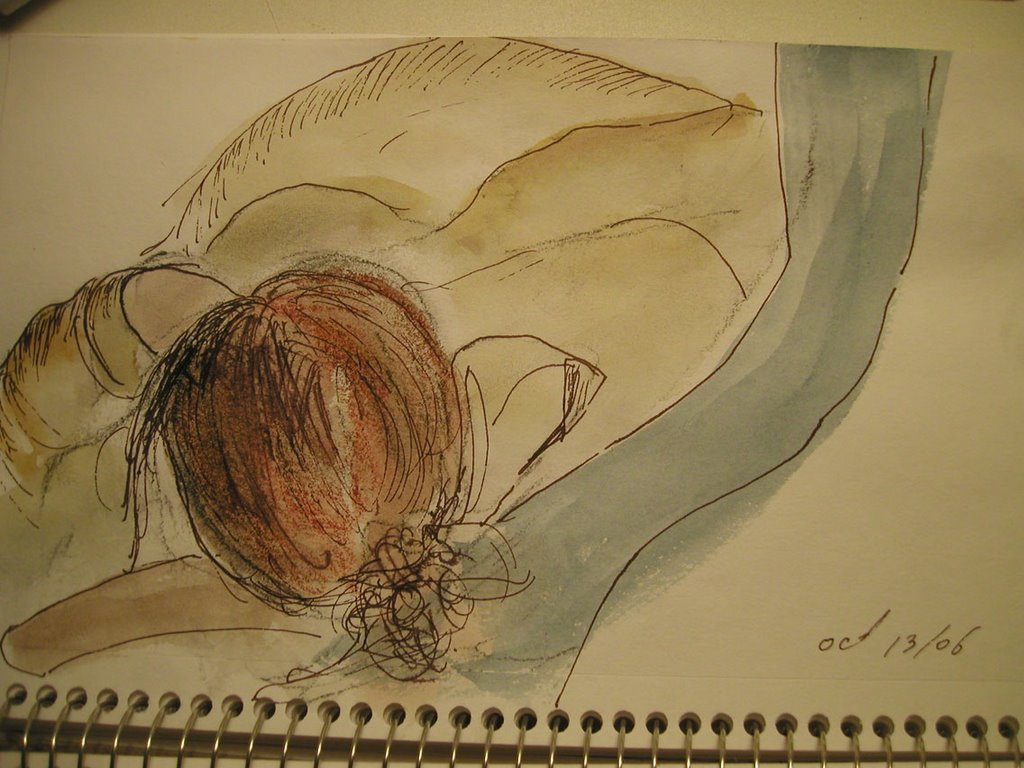
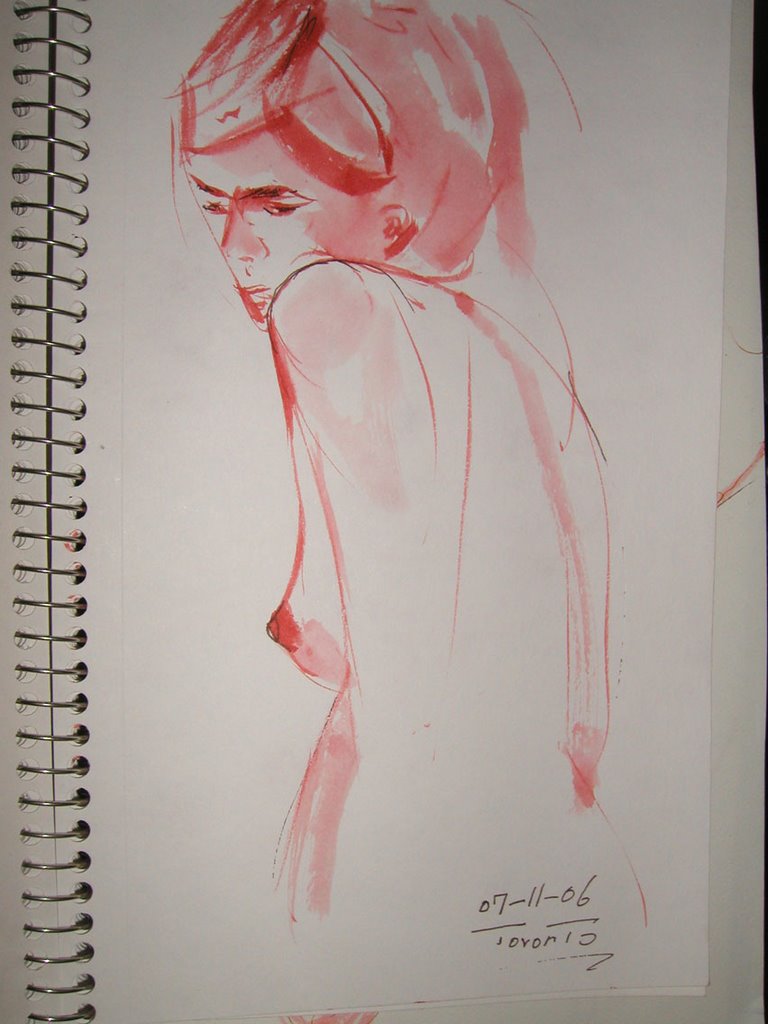
We have all passed through the moments like to be just by ourself and experience sorrow or some other feelings deep inside. This quick sketch reminds me of this glorious moments.

Thursday, December 07, 2006

Poerto Vallarta, city bus

I did this sketch from a photo taken in a city bus in Puerto Vallarta during my recent visit to this city.The basic lines are in watercolor penci, highlighted by watercolor ink and fountain pen. Waterbrush filled in with light w/c ink was added in last stage.

Tuesday, December 05, 2006

Sunday, November 26, 2006

Louis


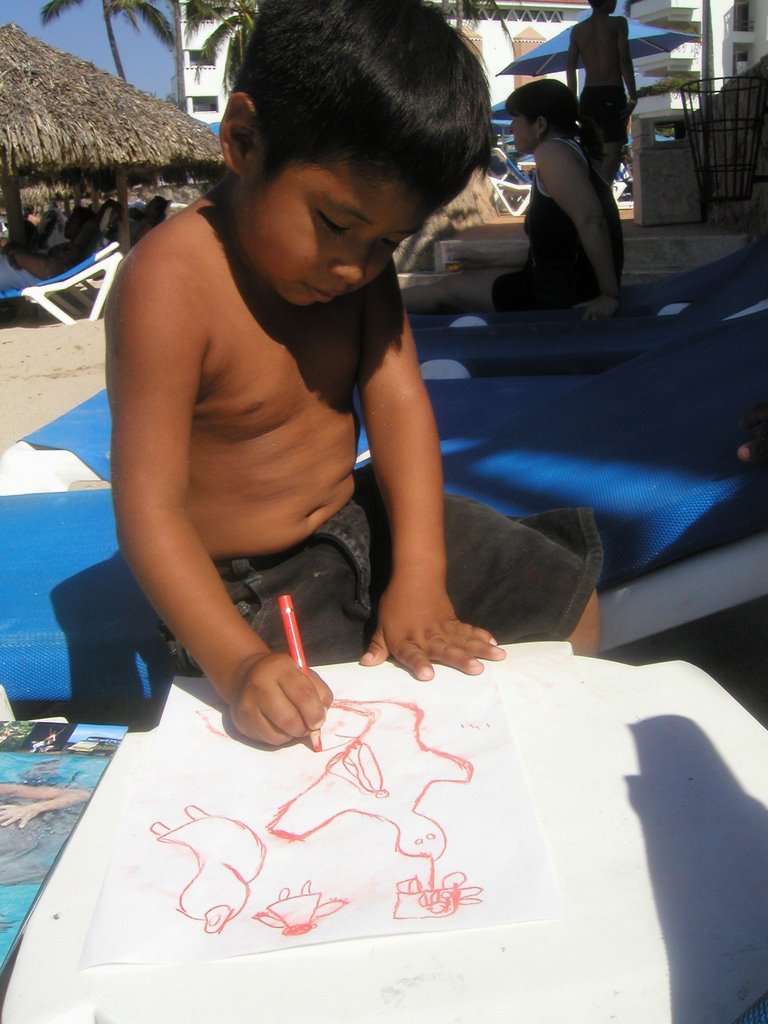
I met Louis and his younger brother in Puerto Vallarta, Mexico wandering around a beach while their mother was selling mexican hand crafts to tourist. while I was sketching some scenary, I asked him and his brother to come and sit by me. Though they did not know English at all and neither me Spanish, we could communicate very easily. To get them attracted, I handed a paper and pencil to the younger boy to draw. And while he was busy with drawing, I made a sketch of Louis, the older boy.

Wednesday, November 08, 2006

What is a sketch


What is a “sketch”?

Browsing old sketch files in Wetcanvas, I ran to a posting by : Katherine Tyrrell,
dated Aug. 04 which sounds very interesting and practical for
sketch lovers. You may read the main part of her writing bellow .

"A sketch, in art terms can be
a way of practising and refining your skills in drawing and mark marking
* an exploratory drawing – exploring how something works/might work
* a quick drawing – e.g. sketching in public tends to be time-limited rather than open-ended
* a rough description – it’s OK if they lack detail; don’t fill the page or are not even completed

* a record of something you’ve seen

* a record of one or more aspects of something you want to develop into a painting e.g. a colour study

*a preliminary study – for a later painting (done before you start to check how your painting will work rather than as an underdrawing on your final support)
A sketch may be an imaginative or a creative interpretation of reference material – but it does not involve meticulous copying of a reference photo.
Very often a sketch is a study of a subject that the artist can see – and consequently involves working and drawing from life. This is the sort of sketch we will focus on in this lesson.
Why sketch?
Sketching broadens and enhances your basic skill base. As you practice and progress, sketching will also help you to:
  • Develop your freehand drawing, mark making and observational skills
  • Draw something everyday – an exercise which will bring fluency and confidence to your drawing
  • Get a better record of the colours and tones you see
  • Practice how to crop a scene and compose a picture
  • Develop finished artwork without relying totally on a reference photo
People who sketch gain value from the following activities:
  • Practicing freehand drawing skills – tracing reference images and using grids can mean that some artists lose their fluency in freehand drawing skills or fail to develop them at all. Sketching improves freehand drawing. With practice comes fluency and the ability to draw more quickly and make more creative and interesting marks.
  • Drawing with minimal aids – when the only drawings aids you have are your pencils and maybe a viewfinder, you soon learn to develop your observational skills. Looking more carefully means you get better at measuring judging by eye alone. You also understand much better ‘how’ a view works – you understand the architectural perspective, the aerial perspective and grasp the recession which often gets flattened in a photograph.
  • Ability to see values and colours – unless you are an expert photographer, once you start to sketch and compare your sketch with photos you took at the same time, you will learn very quickly just how poor photographs are at capturing the true range of tonal values that you have seen. In addition, because you learn to look more carefully at colours, you will also begin to understand how most photographs can distort both contrast and colour, particularly on very bright days. Take photographs to record details and check drawing and sketch to get values and colours correct.
  • Ability to see ‘pictures’ - Once you start to sketch and practice looking at your environment more, you will start to “see pictures” everywhere you go. For many people this marks the point when they know they are beginning to think like an artist. You’ll find you will start using your very own fingers and thumbs to construct a viewfinder to check out potential images to sketch. (Do try to avoid driving the car at the same time!) You will soon find yourself wanting to learn more about about the design and composition of your drawings and paintings. You will want to practice sketching to develop your skills in making choices in this area.
Tuesday, November 07, 2006

waterbrush


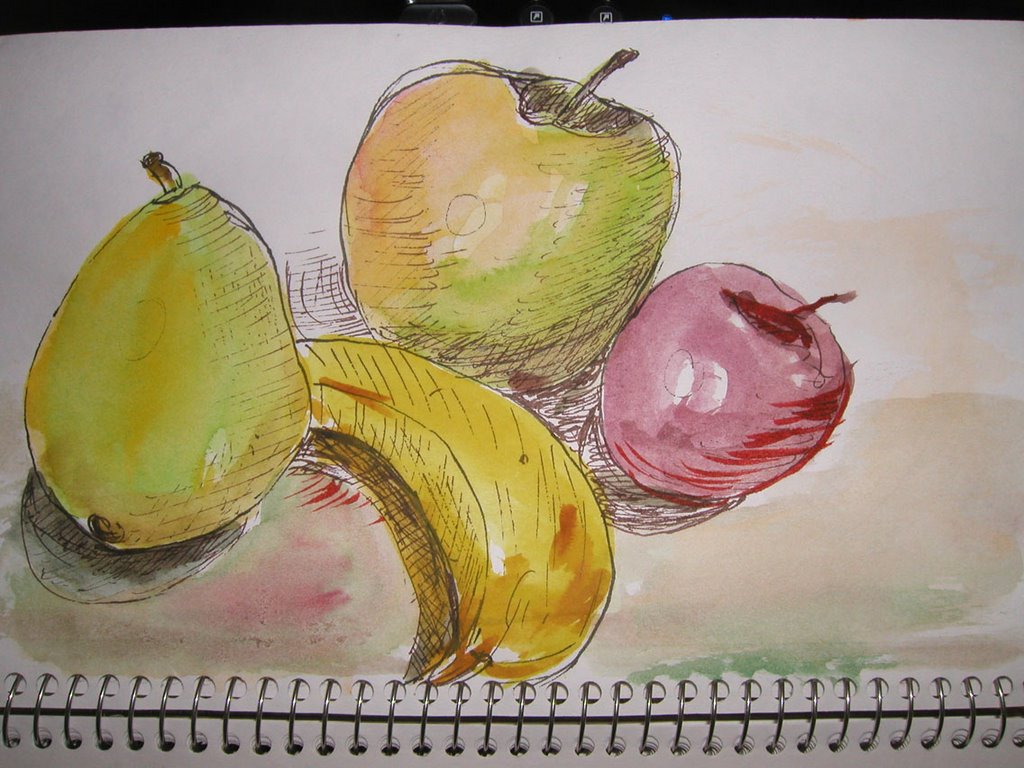
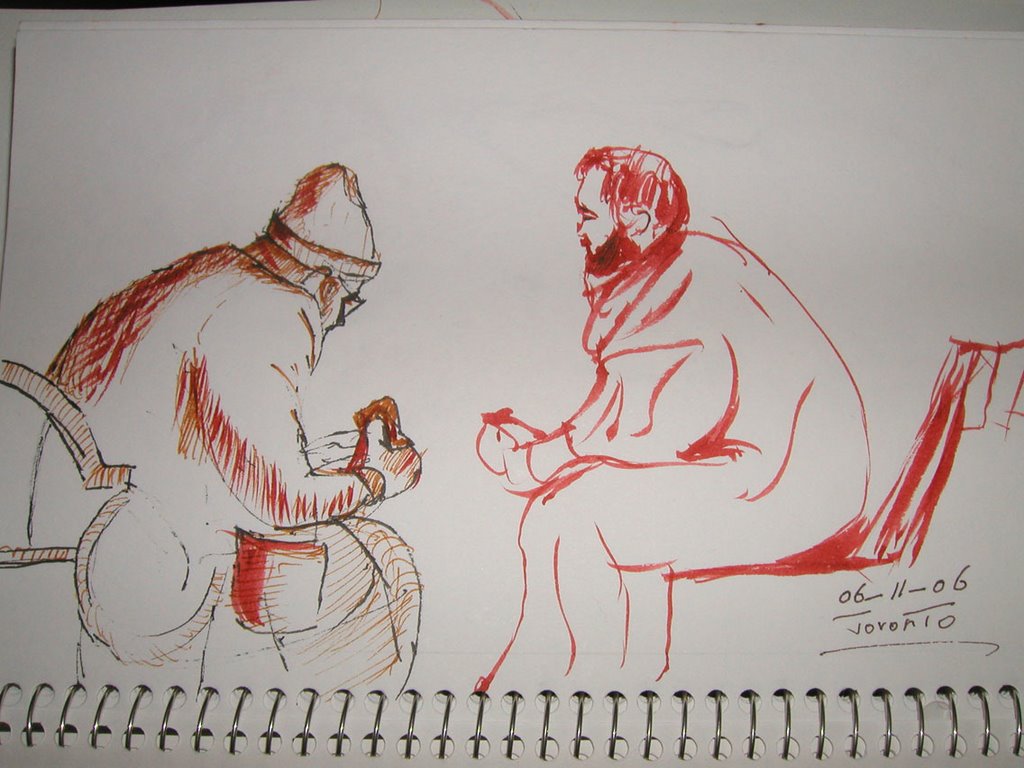
After reading an article abour waterbrush by Russ (www.sketching.cc) and viewing some of his waterbrush works, I thought it would be a good idea to start with it for sketching. So, yesterday,I bought a hulbein brush with some transprant watercolor fluid and started to sketch right away. After experimenting some lines and cures, I rathered to dillut the watercolor with more water for softer and more managable effects. The images posted are done with waterbrush and in some cases addes some pen & ink. I should thank Russ for initiating me to this new brush.

Tuesday, October 24, 2006

Drawing class

Today it was the last session of the 5 weeks drawing class I took with Erick Budovitch in Toronto. though before taking this class, I had done lots of drawing, sketches and paintings, he simply showed me that for a fundamental drawing, it is better to start from the very beginning. Through some hard and sometimes boring training he demontrated that for a good drawing I should forget the details for a while and just try to see the shapes in big masses and geometrically , eather in figures , lanscapes or still life . Seeing the values and contrast of lightness and darkness of the model come in the next stage.

The following is taken from the article : "In praise of drawing " by robert Genne in " Painter's Keys , published : Aug. 1st. 06 http://www.painterskeys.com

Did you know that between 1820 and 1860 there were more than 145,000
"How to Draw" books ublished in the USA? In those pre-camera days, gentlemen and ladies kept memories alive by drawing them. A book by J. Liberty Tadd instructed young women to sketch pigs while standing in a pigsty--"in order to more accurately reflect nature." Many of these books are now on the trash heaps of history, but they nevertheless remind us of other times and other values. This is being made clear in a current exhibition in New York's Grolier Club. "Teaching America to Draw" is worth taking a look at if you happen to be in the area.

Show reviewer Michael Kimmelman says, "Drawing used to be a civilized thing to do, like reading and writing. It was taught in elementary schools. It was democratic. It was a boon to happiness." He notes that these days we have acquiesced to playing a passive role as receivers. We consume drawings rather than make them. There are easier ways to collect images than to draw them.

Monday, October 23, 2006

Painting of the day

This sketchy painting was done with watercolor pencil. The background is soft pastel.

Sunday, October 22, 2006

Washington D.C. journey


A week ago I took a trip to W.Virginia to partcipate in the engagement party of my niece Farzad.To escape the airport hasseles and American security checks and enjoy the fall sceneary rathered to go by bus . While I could have been happy with a few sketches on this route, a sudden storm on the way back to close to buffalo, stocked me in the bus for about 10 hours. The sketches in this section are part of the images I made in that trip


Tuesday, September 26, 2006

In praise of drawing


"Do not fail to draw something every day, for no matter how little it is, it will be well worth while, and it will do you a world of good." (Cennino Cennini, 1370-1440) "

"For those of us who would be fine artists, drawing is still the bottom line. Next to composition, it's the most neglected skill. A drawing a day keeps the cobwebs away. One in the morning before coffee is a credible tonic for a day filled with above average work. Canvas or paper, it matters not. "Good drawing forms the bones on which a strong painting hangs." (Chris Bingle) (In praise of drawing)
The painters Keys archieve,
August 1, 2006 http://www.painterskeys.com)

Sketching for years has led me to drawing world again. Drawing is skelton and infrastructure of all good paintings. No wonder the masters put so many times and efforts into drawing.many art classes advocate painting before grasping the roots and essense of drawing these days. Though the students will be happy not spending much time to draw and jump right away into painting, their teachers are in fact not leading them in the right trait.

Sunday, September 24, 2006

Lugano, Switzerland


These images show Lugano the city in Swiss, close to Milano. The Mountain in the background is Sansalvadora' seen from all angles in the city. You can walk along the lake in less than an hour. I've done some paintings, sketches and photography from the scenes of the city and surroundings on different occasions.

Saturday, September 23, 2006

Abstract image

As a flavour to sketches, I thought why not post some sketchy paintings once in a while between the real sketches .

Untitled

This sketch was done in a couple of minutes. While I was going to draw a bit more detail of this figure she changed her pose quickly and left the location where I spotted her. I had to stop .

Friday, September 22, 2006

Sketch of old man in N.York Library

You can find people from all walks of life in main libraries in Toronto. Libraries, as in book stores, in North America are very alive and active. The first thing that impressed me in the time of my studies in the States back in the 70's was the different large libraries you could find everywhere at campus or in the city. I usually spent a few hours a week in North York library and my favourite book store Chapters. I sketched this old serious gentleman in the same library. He was so mean that I hesitated to sketch him right away. So, after I was sure that he was busy looking at the paper I made this quick sketch of him.